|
Menu
(0)
(65)
Related
|
Scandinavian Fur Traders
This page is under constant development. The idea is to list Scandinavians somehow connected to the North American Fur Trade. We need your help with this! So if you stumble across what might be a Swede, Dane, Norwegian or Finn in the literature, please send us an e-mail containing information such as name, period, geographic area &c. and of course, the source of information.
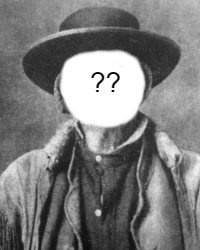 Cross Eagle/Old Swede/Hjalmar Adlercreutz (17??-184?) is so far the only identified Swede in the Rocky Mountain fur trade. Read more about this interesting fellow in the article A Swedish Mountain Man. Cross Eagle/Old Swede/Hjalmar Adlercreutz (17??-184?) is so far the only identified Swede in the Rocky Mountain fur trade. Read more about this interesting fellow in the article A Swedish Mountain Man.
"The Dane", (18??-18??) only known by nationality, was mentioned in 1839 by the German doctor and traveler Friedrich Adolph Wislizenus as follows:
"Our caravan was small. It consisted of only twenty-seven persons. Nine of them were in the service of the Fur Company of St. Louis (Chouteau, Pratte & Co.), and were to bring the merchandise to the yearly rendezvous on the Green River. Their leader was Mr. Harris, a mountaineer without special education, but with five sound senses, that he well knew how to use. All the rest joined the expedition as individuals. Among them were three missionaries, two of them accompanied by their wives, whom a Christian zeal for converting the heathen urged to the Columbia. Some others spoke of a permanent settlement on the Columbia; again, others intended to go to California, and so on. Almost all, however, were actuated by some commercial motive. The majority of the party were Americans; the rest consisted of French Canadians, a few Germans, and a Dane [!!!]."
More re-search required!
 Jacob Fahlström, (1793 or 1795-1859) perhaps more famous as "the first Swede in Minnesota". He was known to the Indians as "Yellowhead" and to the white settlers as "Swede Indian". Jacob Fahlström, (1793 or 1795-1859) perhaps more famous as "the first Swede in Minnesota". He was known to the Indians as "Yellowhead" and to the white settlers as "Swede Indian".
Fahlström was born in Stockholm, and by the age of twelve followed his uncle who was a sea captain to the Hudson Bay of Canada.
“…shortly after reaching land, he went for a hunt with his new double barrel shotgun and got lost in the woods. His uncle did not find him until eight days later in a most fatigued state.”
By the age of sixteen he had decided to stay on the North American continent, and shortly after started his fur trade career. He began trading with the Iroquois, and was soon on the mighty Hudson's Bay Company payroll.
Fahlström is believed to have wandered south along the Red River to Minnesota. Some says he arrived before the construction of Ft.Snelling in 1819, others say after. This is the achievement that made him “the first Swede in Minnesota”.
He was later hired on by Astor's American Fur Company and became chief trader among the Chippewa. His employment lasted for seven years, and during that time he managed to marry Margaret the daughter of Chief Bungo of the Lake Superior Chippewa chiefs in 1823.
As a married man he settled in a cabin close to Ft.Snelling where he was contracted to supply the fort with firewood for three years. He also tried his luck as a courier on the route between Ft.Snelling and Prairie du Chien.
In 1836 Jacob was converted at the Kaposia mission and two years later moved with his family to a cabin close to Lakeside from where he decided to preach his new belief to the Chippewa.
“One night, when he had scratched away the snow, laid down on pine twigs and put a kettle filled with trail food, a freshly killed fowl. Came a wolf and shoved his head into the kettle, but his head got stuck in the handle and he ran into the woods carrying both kettle and food.”
From the early 1840s he lived with his wife and nine children at Bollas Creek close to Afton Minnesota. Here he was known to preach among the Swedish settlers that came in the 1850s.
Fahlström was described as: ”blond and of common stature, a skilled woodsman, a fairly good speaker and with a good singing voice.”
Some claim he lived an “Indian life”, and preferred his life in the woods. He was for example offered to become a partner in the local bank but turned the offer down. He knew at least four languages; Swedish, English, French and Chippewa, probably Iroquois and Sioux as well.
Fahlström died in 1859, his wife in 1880
References:
Lager, Birgitta Jacob Fahlström. - 3 pg. = Pg. 62-64 in: SVENSKT BIOGRAFISKT LEXIKON…15. -1956.
http://freepages.genealogy.rootsweb.ancestry.com/~washingtoncountymn/
Fahlstrom%20Cemetery/jacob%20fahlstrom.htm. Retrieved on Nov. 13 2008
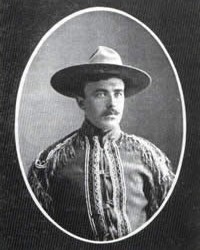 ·Harry Macfie (1879-1956), famous trapper, adventurer, canoe builder and writer from Bohuslän, Sweden. Active in Canada and Alaska in the early 1900s. Find out more at Harry Macfie Canoe Club ·Harry Macfie (1879-1956), famous trapper, adventurer, canoe builder and writer from Bohuslän, Sweden. Active in Canada and Alaska in the early 1900s. Find out more at Harry Macfie Canoe Club
John Henry Weber (1779-1859), Famous mountain man born in the town of Altona, then part of Denmark and now a borough of Hamburg in Germany. We count him as a Dane! As he is famous enough to have his own chapter in Hafen's work and his own Wikipedia article, we will keep our info short.
Weber was one of Ashley's hundred, employed by what would later become the Rocky Mountain Fur Company to “ascend the river Missouri river to its source”. His coworkers were celebrities like Jim Bridger, Jedediah Smith, Thomas Fitzpatrick and Hugh Glass.
Weber became a brigade leader and led numerous trapping expeditions into the fur country, leaving his name on places like Weber Canyon and Weber River.
All in all Weber is the most famous Scandinavian fur trader we have found so far.
Willard Ferdinand Wentzel (1777?-1832), Norwegian/Canadian fur trader. More to come...
|
|
|